Read the summaryContact

Area 1 of 8

Accessibility

I build websites that work with keyboards and screen readers. That’s been a legal requirement for many businesses since June 2025.

  • I’ve built sites to meet all three levels of WCAG 2.1
  • I’ve tested with actual screen readers, not just automated tools
  • I’ve trained developers and designers in accessibility
Area 2 of 8

Frontend architecture

I build technical foundations that are still easy to maintain five years later.

  • I’ve set standards and guidelines for entire teams
  • I evaluate technologies before we spend money on them
  • I’ve led architecture reviews and guided teams through decisions
Area 3 of 8

Performance

I build fast pages. Visitors stick around, and faster pages can rank better in search.

  • I measure performance with PageSpeed Insights, Lighthouse, and WebPageTest
  • I make sure pages load only what they need, when they need it
  • My reference letter notes a “demonstrable improvement in performance”
Area 5 of 8

Writing code

I write code myself and review other developers’ code.

  • I build complex web applications with React and TypeScript
  • I’ve worked with HTML, CSS, and JavaScript daily for over 15 years
  • I maintain quality through code reviews, tests, and shared standards
Area 6 of 8

Understanding design

I build designs the way they were intended.

  • I trained as a media designer at a print shop
  • I work with UX and UI designers as peers
  • I keep design systems in Figma and code in sync

Summary in 30 seconds.

I’m Christian Schimanski, a frontend architect and team lead with over 15 years of experience. I spent 14 years at IBM iX, most recently as Head of Frontend. I now work as an AEM Solution Architect Frontend.

Experience
I have over 15 years of frontend experience. I spent 9 years as Head of Frontend, leading a team of ten developers.
Focus areas
WCAG 2.1 accessibility, frontend architecture, performance, and team leadership.
Technology
HTML, CSS, JavaScript, TypeScript, React, Adobe Experience Manager, and Edge Delivery Services. I also work with databases like MySQL and SQLite.
AI
I manage several AI agents. I’ve built my own code review agent and MCP servers, and I also run models locally.
Education
I trained as a media designer for digital and print (German vocational qualification). I understand design, not just code.
Languages
Native German speaker with C1-level English.
Outside work
Traveling with my camera and drone, 3D printing, and smart home technology.

53 Seconds of Animation.

My profile as a cutout animation on the workbench, with sound. I coded it in the browser and rendered it frame by frame.

I generated the music and sound effects in code. The robot, lamp, clapperboard, and other objects are AI-generated images. The film has no spoken words. Everything it shows is also available as text on this page.

What I do, in detail.

Six areas. In each one, I describe work I’ve done over the years, not what I learned in a course.

Area 1

Accessibility

  • I’ve built websites that meet the international WCAG 2.1 standard at levels A, AA, and AAA. The German Accessibility Strengthening Act (BFSG) has required many companies to meet accessibility requirements since June 28, 2025.
  • I use clean HTML and ARIA attributes so screen readers can tell a button from a heading.
  • I’ve audited and fixed existing websites using Lighthouse, WAVE, and the NVDA and VoiceOver screen readers.
  • I added accessibility checks to the automated workflow so every change is tested before it goes live.
  • I’ve led training sessions and workshops for developers and designers.
  • I’ve written documentation that others rely on.
Area 2

Frontend Architecture

  • I’ve designed architectures that grow with the business and that teams can maintain.
  • I’ve set technical standards and guidelines for development.
  • I’ve evaluated and selected technologies and frameworks.
  • I’ve reviewed existing systems and identified what needed to improve.
  • I’ve led architecture reviews and guided technical discussions to a decision.
  • Today, I build websites with Adobe Experience Manager and Edge Delivery Services, from developing components to setting up workflows for editors to maintain content.
Area 3

Performance

  • I’ve measured load times and found bottlenecks with PageSpeed Insights, Lighthouse, and WebPageTest, using Core Web Vitals as a benchmark.
  • I’ve optimized code, images, and other assets so they load only when needed.
  • I’ve set up caching, removed files that blocked rendering, and compressed data.
  • I’ve sped up browser rendering and reduced memory use.
  • My reference letter notes the result: measurably faster applications and more satisfied users.
Area 4

Leading Teams

  • For nine years, I led a team of ten frontend developers, overseeing their technical work and managing them directly.
  • I’ve hired and onboarded new team members.
  • I’ve conducted performance reviews, agreed on goals with team members, and resolved conflicts.
  • I’ve helped junior and mid-level developers grow through mentoring and training.
  • I’ve planned and managed projects and been responsible for staffing and budgets.
  • I’ve coordinated work with backend and design teams.
Area 5

Hands-on Development

  • I’ve built complex web applications with React and TypeScript.
  • I work with HTML, CSS, and JavaScript at an expert level.
  • I maintain code quality through reviews, automated tests, and shared standards.
  • I’ve integrated APIs and backend services.
  • I make sure the experience is consistent across devices and browsers.
  • I’ve tracked down and fixed difficult bugs.
Area 6

Understanding Design

  • I trained as a media designer for digital and print (German vocational qualification), with a grounding in grids, typography, and color.
  • I work closely with UX and UI designers.
  • I’ve turned Figma designs into reusable components.
  • I’ve kept design systems in sync across design and code.
  • I spot spacing, typography, or grid issues before the client sees them.

14 years, one company.

I went from Web Developer to Head of Frontend at IBM iX. Each step was a promotion.

  1. since
    AEM Solution Architect FrontendAntegma. I design frontend architecture for enterprise websites built on Adobe Experience Manager.
  2. –
    Head of Frontend, most recently Team Lead FrontendIBM iX Düsseldorf. I led a team of ten developers, set the strategy and standards, and kept writing code.
  3. –
    Senior DeveloperIBM iX. I built complex web applications and was responsible for code quality.
  4. –
    Professional DeveloperIBM iX. Promoted “on the basis of his outstanding performance,” as my reference letter puts it.
  5. –
    Web DeveloperIBM iX. I joined on February 1, 2011.
  6. –
    Web Designer and Web DeveloperI designed and built websites and online stores.
  7. –
    Media Design ApprenticeshipI trained at a print shop as a media designer for digital and print (German vocational qualification).

How I work.

This is what IBM iX wrote about me after 14 years. The quotes are in the third person because they come directly from my reference letter.

He always worked calmly and deliberately, with focus and precision.
Even under intense pressure, he was consistently exceptionally reliable, resilient, and efficient.
He found excellent solutions to every problem that arose.
Everyone held him in high regard for his friendly, even-tempered, and helpful nature.
Reference letter from IBM iX, June 2025. Full letter available on request.

AI, done right.

I use AI for more than chat. I manage several agents, build tools for them, run models on my own hardware, and know where AI gets things wrong. Here are eight areas I’ve worked in firsthand.

AI agent
An AI program that does more than answer questions. It can read files, write code, and run tests on its own.
MCP server
Think of it as a power outlet that lets an agent use a specific program. The agent can only do what I allow.
Local AI
A model that runs on your own computer. Nothing gets sent to a provider.
Topic 1

Managing agents

Several AI agents work in parallel. I set the direction and the rules.

  • I assign tasks by difficulty: simpler work goes to cheaper models, harder work to more capable ones.
  • I wrote rules and reusable instructions so agents don’t have to start from scratch every time.
  • I ran more than 3,500 agent sessions in seven months.
Topic 2

AI code review

An agent reviews every code change before a person reads it.

  • I built the agent myself. It automatically reviews every pull request and comments directly on the relevant lines of code.
  • I checked its findings and documented when it was right and when it raised a false alarm.
  • I set up specialized reviews for accessibility, performance, and security.
Topic 3

Connecting agents to software

An agent is only as useful as the tools it’s allowed to use.

  • I built my own MCP servers. One agent sorts and develops photos in Lightroom. Another logs work hours.
  • I connected my smart home and content management system.
  • I limit permissions. An agent can only do what I explicitly allow.
Topic 4

Local AI

I run AI on my own hardware when data needs to stay in-house.

  • I ran and compared language models locally on a Mac and a Windows PC.
  • I built offline voiceprint identification and speech recognition for my phone.
  • I set and enforced a rule: Certain images never go to the cloud.
Five glowing round faces in blue and gold: listening, thinking, speaking, showing delight, and giving a notification
Lux on the round display: five states, from listening to giving a notification.
Topic 5

Voice

I built a complete voice assistant myself. I didn’t just set one up.

  • “Lux” listens for its own wake word, understands speech, and responds in its own voice.
  • It runs on phones, tablets, Macs, and Windows PCs, in German and Bulgarian.
  • It recognizes who’s speaking and handles everyday smart home controls for my family.
Topic 6

Images and video

I create drafts and visuals in minutes instead of days.

  • I generated images locally on my own graphics card and with models in the cloud.
  • I used AI video tools to create camera moves that website visitors control by scrolling.
  • AI generated each piece of the workbench on this page separately. I picked the pieces and put them together.
Topic 7

Quality and limits

I know where AI gets things wrong, and I don’t take its word for it.

  • I wrote rules to avoid the generic look of AI-generated designs and checked them with blind tests.
  • I measured results against my own test data instead of going with my gut.
  • When AI gets something wrong, I write a rule for it. The agents read and maintain more than 1,600 pages of documentation.
  • Nothing goes live without my approval.
Topic 8

Agents in the background

My agents run daily and overnight tasks on their own.

  • Every day, they check whether newly reported vulnerabilities affect my tech stack.
  • Every night, they check whether all backups ran.
  • I investigated and fixed false alarms so the alerts are worth taking seriously.
  1. IdeaI decide what to build and why
  2. PlanAn agent proposes a plan. I approve it
  3. BuildAgents explore options, write code, and run tests in parallel
  4. ReviewI check the work against written rules
  5. DeployNothing ships until I’ve reviewed it

I decide on the architecture, the direction, and what “done” means.

Agents handle alternatives, grunt work, tests, and documentation.

I check every result. When AI gets something wrong, I write a rule for it.

Three more projects I built with agents.

3D model of a house at night, with the roof and upper floor lifted and some rooms lit
The model at night, with the floors pulled apart. Lights are on wherever they’re on in the real house.
Digital twin

House in 3D

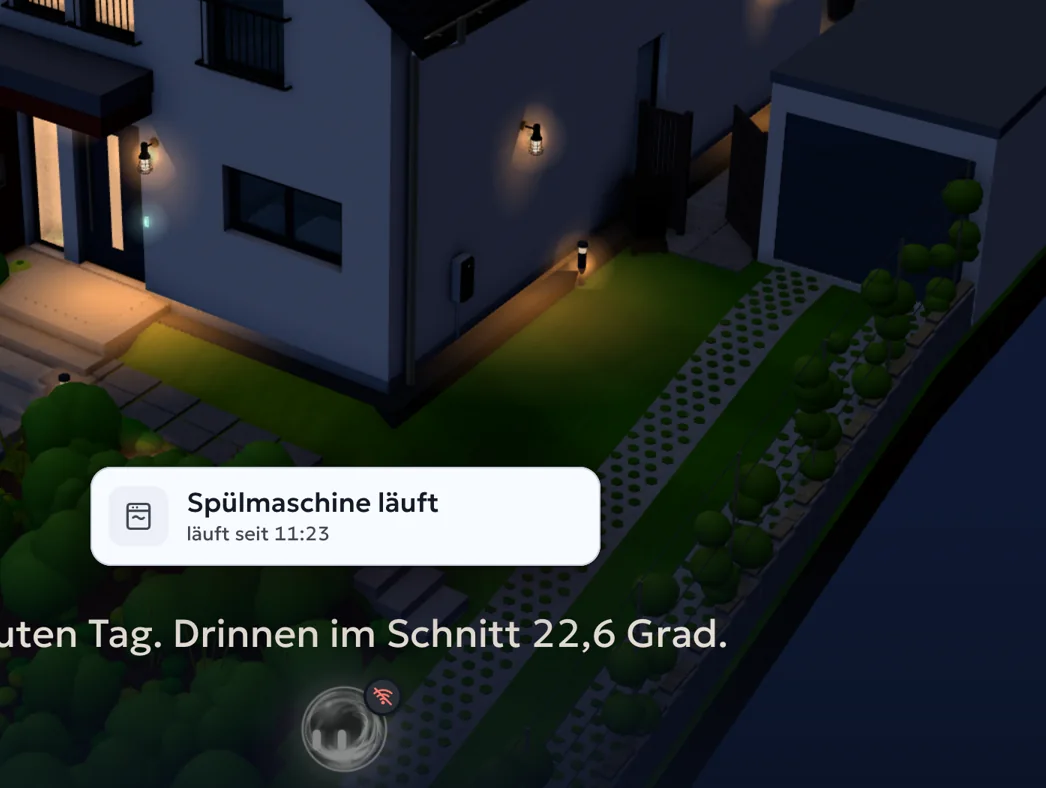
What it does: A 3D model of my home that runs in the browser. You can see which lights are on, how warm each room is, and what’s drawing power, all in real time.

What it shows: 3D graphics that run smoothly in the browser, even on low-powered hardware.

Close-up of the interface showing the outside of the house model, with the messages Dishwasher running since 11:23 and Average indoor temperature: 22.6 degrees above it
A live notification in the model.
Video

Wayfare

What it does: It sorts through vacation recordings from a 360° camera, a drone, and a microphone, syncs them, and sets up a video editing project.

What it shows: How I work with unfamiliar file formats and automate the prep without making editing decisions for you.

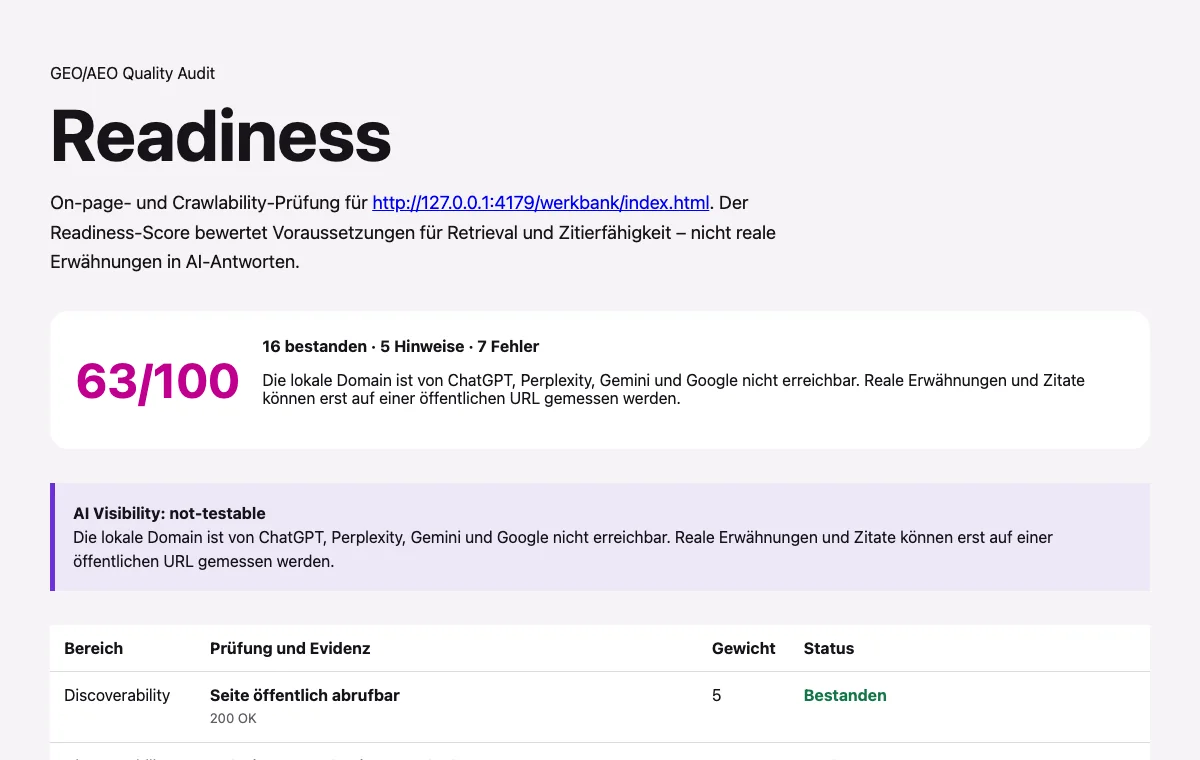
Audit report showing a score of 63 out of 100, followed by 16 passes, 5 notices, 7 errors, and a table of individual checks
The tool scored an early version of this site 63 out of 100.
Audit tool

GEO Audit

What it does: It runs 28 standard checks to see whether AI search services like ChatGPT can read, understand, and cite a website. Then it gives the site a score.

What it shows: How I turn a vague question into something measurable.

Tools: Claude Code, Codex, Gemini, Ollama, MLX, llama.cpp, ComfyUI, Whisper, Home Assistant.

Frequently Asked Questions.

How much leadership experience do you have?

Nine years. From 2016 to 2025, I was Head of Frontend at IBM iX. I provided technical direction and managed a team of ten frontend developers. My responsibilities included hiring, performance reviews, and mentoring.

What experience do you have with accessibility?

I build websites to meet WCAG 2.1 at levels A, AA, and AAA. I test them with Lighthouse, WAVE, and the NVDA and VoiceOver screen readers. I integrated accessibility checks into automated workflows and trained developers and designers to use them.

What technologies do you work with?

I work with HTML, CSS, JavaScript, TypeScript, and React. As an architect, I work with Adobe Experience Manager and Edge Delivery Services. For testing, I use Playwright, Jest, and Cypress.

How do you use AI?

I run several AI agents in parallel. I built my own AI agent for code reviews and my own MCP servers. I also run language models locally when data can’t go to the cloud. I review every result myself.

Do you still write code yourself?

Yes. I kept writing code and reviewing other developers’ code throughout my time as Head of Frontend and as an architect.

How did you build this site?

I built the site with AI agents, directed their work, and signed off on the final result. The workbench and the objects on it are AI-generated images. The content comes from my reference letter and résumé. I tested the site in Chromium, WebKit, and Firefox.

Get in touch with me.

Questions about accessibility, frontend architecture, or working with AI agents? I’d be happy to talk.

  • German, English (C1)
  • Eifel